A Bible Study
Lucifer and the King of Tyre
Who are Isaiah 14 and Ezekiel 28 really talking about?
Scripture quotations from the Berean Standard Bible (BSB) unless noted
The Question
Many Christians have been taught that Isaiah 14 and Ezekiel 28 tell the story of Satan’s origin: that he was once “Lucifer,” a perfect, anointed cherub who lived in Eden, led the worship of heaven, became proud, and was thrown out of heaven before Adam was created. These two chapters are the main texts behind that teaching.
This study asks a simple question: what do the passages themselves say? It reads each chapter in its context, lays out the arguments for who is being described, compares the two passages, gives the strongest case for seeing Satan in them, gathers what the rest of Scripture says about Satan, and closes with a conclusion.
Scripture passages appear in shaded boxes so they can be read and referenced easily. Superscript numbers mark verses. Where the King James Version (KJV) wording matters to the discussion, it is noted.
Part 1
Isaiah 14: The King of Babylon
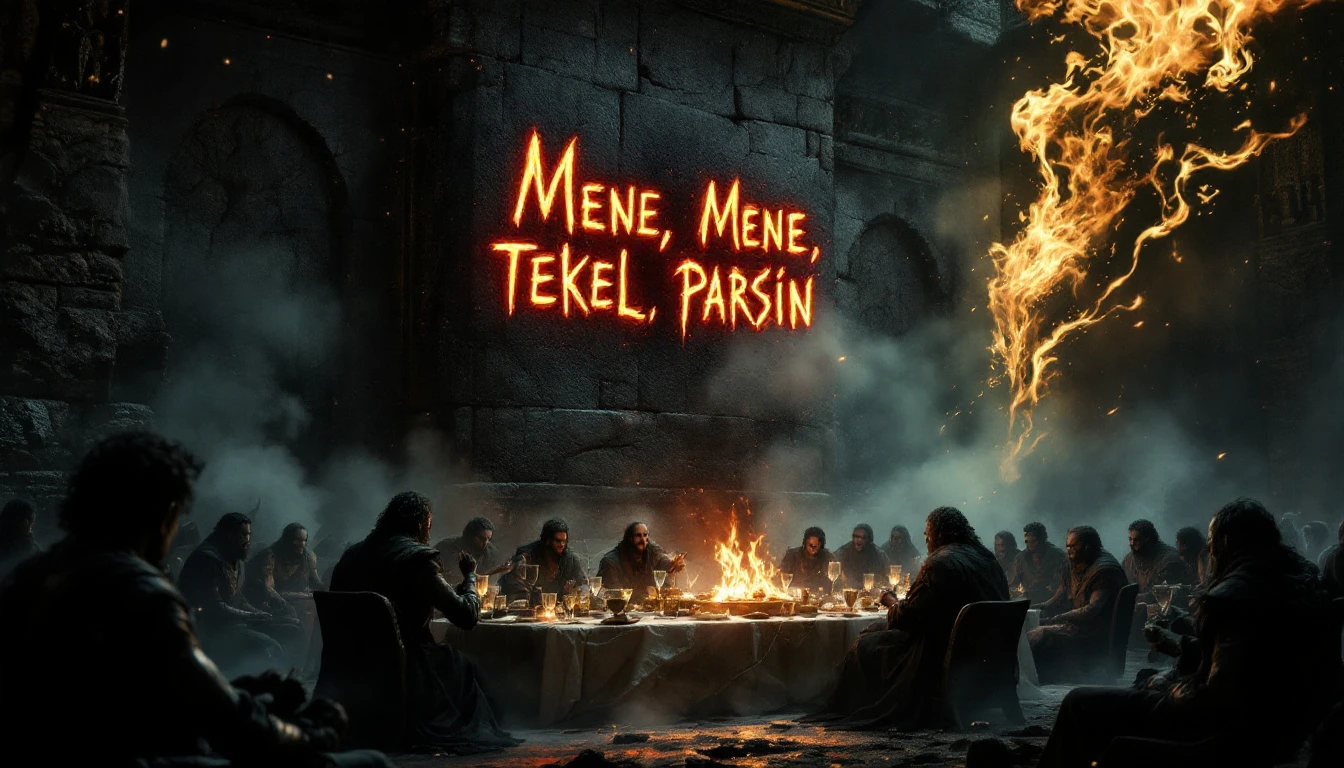
Babylon’s king is weighed and found wanting (Daniel 5).
The passage in context
Isaiah 13 and 14 form a single prophecy against Babylon. It opens with a heading that tells the reader what the whole message is about:
ISAIAH 13:1
This is the burden against Babylon that Isaiah son of Amoz received:
Chapter 13 announces Babylon’s overthrow. Chapter 14 then tells Israel what it will sing on the day God frees it from Babylonian captivity:
ISAIAH 14:3–4
3On the day that the LORD gives you rest from your pain and torment, and from the hard labor into which you were forced, 4you will sing this song of contempt against the king of Babylon: How the oppressor has ceased, and how his fury has ended!
The song that follows (verses 4–21) contains the famous “day star” verses. Here it is, read straight through:
ISAIAH 14:9–21
9Sheol beneath is eager to meet you upon your arrival. It stirs the spirits of the dead to greet you— all the rulers of the earth. It makes all the kings of the nations rise from their thrones. 10They will all respond to you, saying, “You too have become weak, as we are; you have become like us!” 11Your pomp has been brought down to Sheol, along with the music of your harps. Maggots are your bed and worms your blanket. 12How you have fallen from heaven, O day star, son of the dawn! You have been cut down to the ground, O destroyer of nations. 13You said in your heart: “I will ascend to the heavens; I will raise my throne above the stars of God. I will sit on the mount of assembly, in the far reaches of the north. 14I will ascend above the tops of the clouds; I will make myself like the Most High.” 15But you will be brought down to Sheol, to the lowest depths of the Pit. 16Those who see you will stare; they will ponder your fate: “Is this the man who shook the earth and made the kingdoms tremble, 17who turned the world into a desert and destroyed its cities, who refused to let the captives return to their homes?” 18All the kings of the nations lie in state, each in his own tomb. 19But you are cast out of your grave like a rejected branch, covered by those slain with the sword, and dumped into a rocky pit like a carcass trampled underfoot. 20You will not join them in burial, since you have destroyed your land and slaughtered your own people. The offspring of the wicked will never again be mentioned. 21Prepare a place to slaughter his sons for the iniquities of their forefathers. They will never rise up to possess a land or cover the earth with their cities.
The prophecy then closes the way it began, with Babylon:
ISAIAH 14:22
“I will rise up against them,” declares the LORD of Hosts. “I will cut off from Babylon her name and her remnant, her offspring and her posterity,” declares the LORD.
Argument 1: The text names its subject
Verse 4 says plainly that the song is “against the king of Babylon.” Nothing between verse 4 and verse 21 signals that the subject has changed.
The “day star” of verse 12 suffers exactly what the king suffers in verses 9–11. He is brought down to Sheol (verse 15, compare verse 9), and the kings of the nations look on (verses 9–10, 16–18).
The prophecy finishes where it started: “I will cut off from Babylon her name and her remnant” (verse 22).
Argument 2: “Lucifer” is a title, not a name
The phrase in verse 12 is hêlēl ben-šāḥar in Hebrew, meaning “shining one, son of the dawn,” a name for the morning star (the planet Venus). The Latin Vulgate translated it lucifer, the ordinary Latin word for the morning star (literally “light-bearer”). The King James Version kept the Latin word instead of translating it, so it reads like a personal name: “How art thou fallen from heaven, O Lucifer, son of the morning!” Most modern translations translate it; the BSB reads “O day star, son of the dawn.”
The word “Lucifer” appears only here in the KJV, and no verse anywhere in Scripture connects it with Satan. In the ancient world, kings were given grand royal titles, and Scripture applies some of the same titles both to earthly kings and to Christ:
DANIEL 2:37
You, O king, are the king of kings, to whom the God of heaven has given sovereignty, power, strength, and glory.
REVELATION 22:16
“I, Jesus, have sent My angel to give you this testimony for the churches. I am the Root and the Offspring of David, the bright Morning Star.”
2 PETER 1:19
We also have the word of the prophets as confirmed beyond doubt. And you will do well to pay attention to it, as to a lamp shining in a dark place, until the day dawns and the morning star rises in your hearts.
In the Latin Vulgate, the word for “morning star” in 2 Peter 1:19 is lucifer. In the Latin Bible, the same word describes Christ rising in the believer’s heart. Nebuchadnezzar could be called “king of kings” and a Babylonian king could be mocked as the “day star,” yet both titles ultimately belong to Jesus, the true King.
Argument 3: The one addressed is a man
Look at what the song says about the “day star”:
He is called a man: “Is this the man who shook the earth and made the kingdoms tremble” (verse 16).
He dies and goes down to Sheol, the realm of the dead (verses 9, 11, 15).
He has a grave, is cast out of it, and is denied burial with the other kings (verses 18–20).
He is “covered by those slain with the sword” (verse 19).
His sons are to be slaughtered so they cannot rule after him (verse 21).
None of these fits an angel. All of them fit a conquering king who dies in disgrace.
Argument 4: The boasts fit a human king
Verses 13–14 (“I will ascend to the heavens… I will make myself like the Most High”) are often said to be too great for any man to say. But Scripture uses exactly this language for human pride, and for Babylon in particular.
Babylon began with this ambition
GENESIS 11:4
“Come,” they said, “let us build for ourselves a city with a tower that reaches to the heavens, that we may make a name for ourselves and not be scattered over the face of all the earth.”
Jeremiah uses the same picture for the same empire
JEREMIAH 51:53
Even if Babylon ascends to the heavens and fortifies her lofty stronghold, the destroyers I send will come against her,” declares the LORD.
Babylon’s actual kings exalted themselves against God
DANIEL 4:30
the king exclaimed, “Is this not Babylon the Great, which I myself have built by the might of my power as a royal residence and for the glory of my majesty?”
DANIEL 4:37
Now I, Nebuchadnezzar, praise and exalt and glorify the King of heaven, for all His works are true and all His ways are just. And He is able to humble those who walk in pride.
DANIEL 5:20
But when his heart became arrogant and his spirit was hardened with pride, he was deposed from his royal throne, and his glory was taken from him.
DANIEL 5:23 (PART)
Instead, you have exalted yourself against the Lord of heaven.
The same language is used for Edom
OBADIAH 3–4
3The pride of your heart has deceived you, O dwellers in the clefts of the rocks whose habitation is the heights, who say in your heart, ‘Who can bring me down to the ground?’ 4Though you soar like the eagle and make your nest among the stars, even from there I will bring you down,” declares the LORD.
Jesus uses Isaiah 14’s language for a town
LUKE 10:15
And you, Capernaum, will you be lifted up to heaven? No, you will be brought down to Hades!
Compare Isaiah 14:13–15: “I will ascend to the heavens… But you will be brought down to Sheol.” Jesus applies the same words to Capernaum (also Matthew 11:23). If this language can describe Edom and Capernaum, it can describe the king of Babylon.
Argument 5: The “mount of assembly” points to God’s dwelling
The king boasts, “I will sit on the mount of assembly, in the far reaches of the north” (Isaiah 14:13). The Hebrew phrase translated “far reaches of the north” (yarkete tsaphon) is the same phrase Psalm 48 uses for Mount Zion (BSB: “the peaks of Zaphon”):
PSALM 48:1–2
1A song. A Psalm of the sons of Korah. Great is the LORD, and greatly to be praised in the city of our God, His holy mountain. 2Beautiful in loftiness, the joy of all the earth, like the peaks of Zaphon is Mount Zion, the city of the great King.
In the surrounding nations, Zaphon was also the mountain where the gods were believed to gather. Either way, the boast is a claim to sit in the place of God. Babylon acted on that pride by plundering God’s house:
2 KINGS 25:13
Moreover, the Chaldeans broke up the bronze pillars and stands and the bronze Sea in the house of the LORD, and they carried the bronze to Babylon.
DANIEL 5:3
Thus they brought in the gold vessels that had been taken from the temple, the house of God in Jerusalem, and the king drank from them, along with his nobles, his wives, and his concubines.
Argument 6: The underworld scene is poetry, sung in advance
In verses 9–10 Sheol “stirs the spirits of the dead,” and dead kings speak to the newcomer. Ezekiel uses the same picture for Pharaoh, a human king:
EZEKIEL 32:21
Mighty chiefs will speak from the midst of Sheol about Egypt and her allies: ‘They have come down and lie with the uncircumcised, with those slain by the sword.’
This is the style of a taunt song, not a report of events in the spirit world. Notice too that the song speaks of the fall as already past (“How you have fallen”), even though Babylon had not yet fallen when Isaiah wrote. The prophets often announced coming judgment as if it had already happened:
ISAIAH 21:9
Look, here come the riders, horsemen in pairs.” And one answered, saying: “Fallen, fallen is Babylon! All the images of her gods lie shattered on the ground!”
REVELATION 18:2
And he cried out in a mighty voice: “Fallen, fallen is Babylon the great! She has become a lair for demons and a haunt for every unclean spirit, every unclean bird, and every detestable beast.
Part 2
Ezekiel 28: The King of Tyre
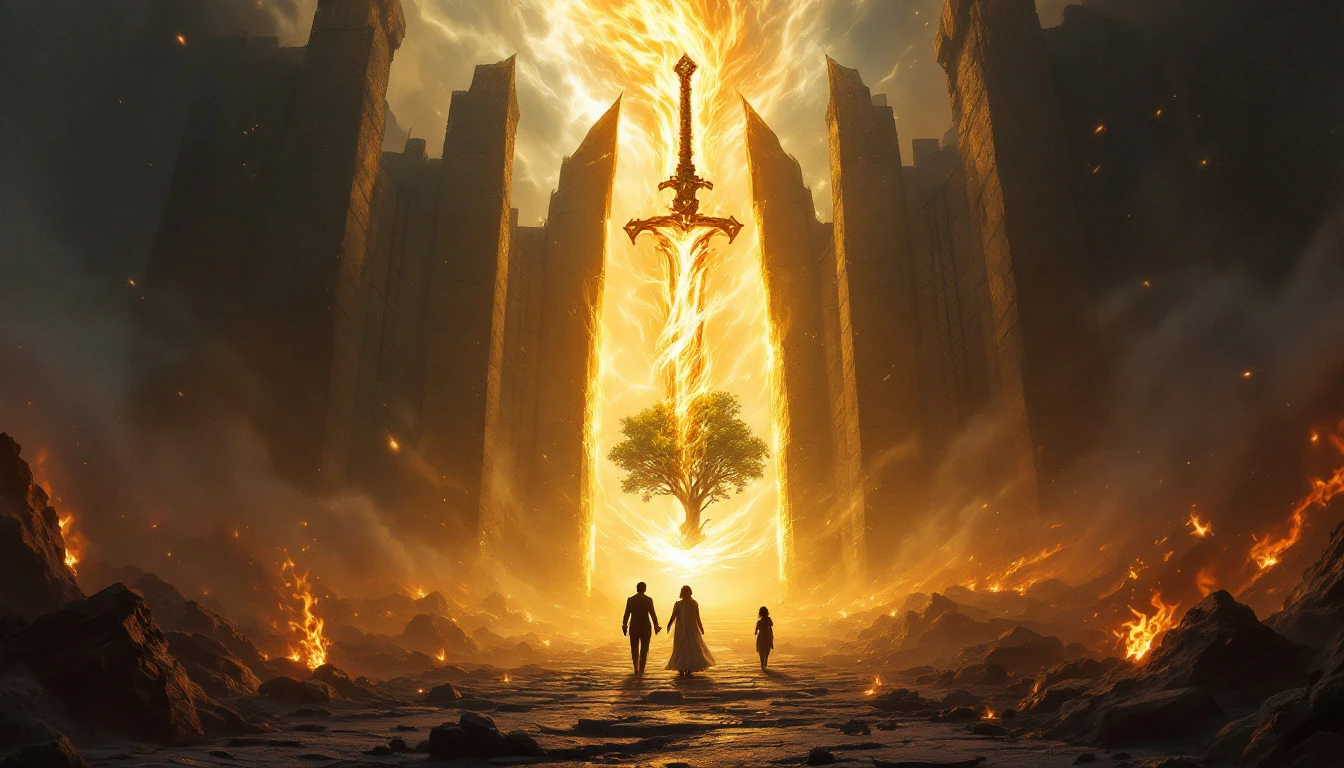
Cherubim guard the way to the tree of life (Genesis 3:24).
The passage in context
Ezekiel 26–28 is one long prophecy against Tyre, the wealthy Phoenician sea-trading city on the coast north of Israel. It begins after Jerusalem has fallen, because Tyre gloated over Jerusalem’s ruin (26:2). Chapter 26 announces Nebuchadnezzar’s attack:
EZEKIEL 26:7
For this is what the Lord GOD says: ‘Behold, I will bring against Tyre from the north Nebuchadnezzar king of Babylon, king of kings, with horses and chariots, with cavalry and a great company of troops.
Chapter 27 is a lament for Tyre, pictured as a magnificent merchant ship:
EZEKIEL 27:2–4
2“Now you, son of man, take up a lament for Tyre. 3Tell Tyre, who dwells at the gateway to the sea, merchant of the peoples on many coasts, that this is what the Lord GOD says: You have said, O Tyre, ‘I am perfect in beauty.’ 4Your borders are in the heart of the seas; your builders perfected your beauty.
Chapter 28 then speaks to Tyre’s ruler in two parts: a prophecy against “the ruler of Tyre” (verses 1–10) and a lament for “the king of Tyre” (verses 11–19). Verses 20–23 turn to Sidon, Tyre’s neighbor.
Verses 1–10: against the ruler of Tyre
EZEKIEL 28:2–10
2“Son of man, tell the ruler of Tyre that this is what the Lord GOD says: Your heart is proud, and you have said, ‘I am a god; I sit in the seat of gods in the heart of the sea.’ Yet you are a man and not a god, though you have regarded your heart as that of a god. 3Behold, you are wiser than Daniel; no secret is hidden from you! 4By your wisdom and understanding you have gained your wealth and amassed gold and silver for your treasuries. 5By your great skill in trading you have increased your wealth, but your heart has grown proud because of it. 6Therefore this is what the Lord GOD says: Because you regard your heart as the heart of a god, 7behold, I will bring foreigners against you, the most ruthless of nations. They will draw their swords against the beauty of your wisdom and will defile your splendor. 8They will bring you down to the Pit, and you will die a violent death in the heart of the seas. 9Will you still say, ‘I am a god,’ in the presence of those who slay you? You will be only a man, not a god, in the hands of those who wound you. 10You will die the death of the uncircumcised at the hands of foreigners. For I have spoken, declares the Lord GOD.”
Verses 11–19: a lament for the king of Tyre
EZEKIEL 28:11–19
11Again the word of the LORD came to me, saying, 12“Son of man, take up a lament for the king of Tyre and tell him that this is what the Lord GOD says: ‘You were the seal of perfection, full of wisdom and perfect in beauty. 13You were in Eden, the garden of God. Every kind of precious stone adorned you: ruby, topaz, and diamond, beryl, onyx, and jasper, sapphire, turquoise, and emerald. Your mountings and settings were crafted in gold, prepared on the day of your creation. 14You were anointed as a guardian cherub, for I had ordained you. You were on the holy mountain of God; you walked among the fiery stones. 15From the day you were created you were blameless in your ways— until wickedness was found in you. 16By the vastness of your trade, you were filled with violence, and you sinned. So I drove you in disgrace from the mountain of God, and I banished you, O guardian cherub, from among the fiery stones. 17Your heart grew proud of your beauty; you corrupted your wisdom because of your splendor; so I cast you to the earth; I made you a spectacle before kings. 18By the multitude of your iniquities and the dishonesty of your trading you have profaned your sanctuaries. So I made fire come from within you, and it consumed you. I reduced you to ashes on the ground in the eyes of all who saw you. 19All the nations who know you are appalled over you. You have come to a horrible end and will be no more.’”
Argument 1: The text names its subject
Verse 2 addresses “the ruler of Tyre”; verse 12 addresses “the king of Tyre.” The three chapters around them are about Tyre.
The words “Lucifer,” “Satan,” and “devil” do not appear anywhere in the passage.
Ezekiel gives no signal that the subject changes at verse 11. To read verses 11–19 as addressed to someone else, the reader has to assume a switch the prophet never announces.
Argument 2: “Ruler” (prince) and “king” are the same person
Some argue that the “ruler” of verse 2 (KJV “prince”) is the human king, while the “king” of verse 12 is the spiritual power behind him. But Ezekiel uses the two titles for the same person:
EZEKIEL 37:24–25
24My servant David will be king over them, and there will be one shepherd for all of them. They will follow My ordinances and keep and observe My statutes. 25They will live in the land that I gave to My servant Jacob, where your fathers lived. They will live there forever with their children and grandchildren, and My servant David will be their prince forever.
David is “king” in verse 24 and “prince” in verse 25. Likewise, “the prince in Jerusalem” in Ezekiel 12 is King Zedekiah:
EZEKIEL 12:10
Tell them that this is what the Lord GOD says: ‘This burden concerns the prince in Jerusalem and all the house of Israel who are there.’
Every king is also a prince. Calling the king of Tyre a mere “ruler” or “prince” may even be a deliberate put-down of a man who claimed to be a god.
Argument 3: “You were in Eden” is a figure of speech
Ezekiel uses Eden as a picture of privilege and splendor for other nations too. Just three chapters later, he warns Pharaoh by comparing Assyria to a great cedar:
EZEKIEL 31:2–3
2“Son of man, say to Pharaoh king of Egypt and to his multitude: ‘Who can be compared to your greatness? 3Look at Assyria, a cedar in Lebanon, with beautiful branches that shaded the forest. It towered on high; its top was among the clouds.
EZEKIEL 31:8–9
8The cedars in the garden of God could not rival it; the cypresses could not compare with its branches, nor the plane trees match its boughs. No tree in the garden of God could compare with its beauty. 9I made it beautiful with its many branches, the envy of all the trees of Eden, which were in the garden of God.’
EZEKIEL 31:16
I made the nations quake at the sound of its downfall, when I cast it down to Sheol with those who descend to the Pit. Then all the trees of Eden, the choicest and best of Lebanon, all the well-watered trees, were consoled in the earth below.
EZEKIEL 31:18
Who then is like you in glory and greatness among the trees of Eden? You also will be brought down to the depths of the earth to be with the trees of Eden. You will lie among the uncircumcised, with those slain by the sword. This is Pharaoh and all his multitude, declares the Lord GOD.’”
The “trees of Eden” are the other kings and nations, and the passage ends, “This is Pharaoh and all his multitude.” No one takes this to mean Assyria or Pharaoh was literally a tree in the Garden of Eden. Other prophets use Eden the same way:
ISAIAH 51:3
For the LORD will comfort Zion and will look with compassion on all her ruins; He will make her wilderness like Eden and her desert like the garden of the LORD. Joy and gladness will be found in her, thanksgiving and melodious song.
EZEKIEL 36:35
Then they will say, ‘This land that was desolate has become like the garden of Eden. The cities that were once ruined, desolate, and destroyed are now fortified and inhabited.’
There is a further problem with reading Eden literally. If 28:13 means the literal garden, the only cherub Scripture places there is the one God stationed to guard it after Adam sinned. That cherub was God’s faithful servant. The being Scripture connects with Satan in Eden is the serpent (Genesis 3:1; Revelation 12:9), not a cherub.
GENESIS 3:24
So He drove out the man and stationed cherubim on the east side of the Garden of Eden, along with a whirling sword of flame to guard the way to the tree of life.
Argument 4: The “guardian cherub” pictures the king’s office
Cherubim in Ezekiel are four-faced beings (see below). Those who see Satan in this passage usually picture him as an archangel, which is a different kind of being.
Cherubim were guardians. They guarded the way to the tree of life (Genesis 3:24) and overshadowed the mercy seat (Exodus 25:20). The Hebrew word in Ezekiel 28:14 translated “guardian” (KJV “that covereth”) comes from the same root as “overshadowing” in Exodus 25:20.
Kings were anointed and set in office to protect their people. Calling the king of Tyre an anointed guardian cherub describes his exalted, protective office in the grandest possible terms.
EZEKIEL 10:14
Each of the cherubim had four faces: the first face was that of a cherub, the second that of a man, the third that of a lion, and the fourth that of an eagle.
EXODUS 25:20
And the cherubim are to have wings that spread upward, overshadowing the mercy seat. The cherubim are to face each other, looking toward the mercy seat.
Translation note on Ezekiel 28:14 and 16
The Hebrew of verse 14 can be read two ways, depending on the vowels supplied. The BSB and KJV read “You were… a guardian cherub.” The Greek Old Testament (Septuagint) and some modern translations (such as the RSV and NRSV) read it to say God placed the king with an anointed guardian cherub, and they read verse 16 to say the guardian cherub drove him out.
On that reading, the king is not the cherub at all. He is placed in the garden like Adam and expelled while the cherub stands guard, just as in Genesis 3:24.
Argument 5: The king is pictured as a new Adam
Whichever reading of verse 14 is followed, the lament retells Adam’s story with the king of Tyre in Adam’s place:
Theme
Adam (Genesis 2–3)
King of Tyre (Ezekiel 28)
Placed in the garden
Adam (Genesis 2–3)
“The LORD God took the man and placed him in the Garden of Eden” (2:15)
King of Tyre (Ezekiel 28)
“You were in Eden, the garden of God” (28:13)
Given a guarding role
Adam (Genesis 2–3)
Placed there “to cultivate and keep it” (2:15)
King of Tyre (Ezekiel 28)
“You were anointed as a guardian cherub, for I had ordained you” (28:14)
Created
Adam (Genesis 2–3)
God formed and placed the man (2:8)
King of Tyre (Ezekiel 28)
“prepared on the day of your creation” (28:13)
Blameless at first
Adam (Genesis 2–3)
Made good, without sin
King of Tyre (Ezekiel 28)
“From the day you were created you were blameless in your ways— until wickedness was found in you” (28:15)
Grasping at divinity
Adam (Genesis 2–3)
“you will be like God” (3:5)
King of Tyre (Ezekiel 28)
“I am a god; I sit in the seat of gods” (28:2)
Driven out
Adam (Genesis 2–3)
“So He drove out the man” (3:24)
King of Tyre (Ezekiel 28)
“So I drove you in disgrace from the mountain of God” (28:16)
Ezekiel casts the king of Tyre as a new Adam: richly blessed, set in a privileged position, then expelled for reaching for what belongs to God alone. This explains the “Eden,” “created,” and “blameless” language without bringing Satan into the passage.
Argument 6: “Perfect” and “wise” are Tyre’s own boasts
Ezekiel 27:3 quotes the city: “You have said, O Tyre, ‘I am perfect in beauty.’”
Ezekiel 28:3 is sarcasm: “Behold, you are wiser than Daniel; no secret is hidden from you!” Daniel, Ezekiel’s contemporary in Babylon, was famous for the wisdom God gave him.
Ezekiel 28:12 (“full of wisdom and perfect in beauty”) repeats those boasts back to the king before announcing his doom.
“Blameless” in verse 15 is also used of ordinary men. The same Hebrew word describes Noah, and Job is likewise called blameless:
GENESIS 6:9
This is the account of Noah. Noah was a righteous man, blameless in his generation; Noah walked with God.
JOB 1:1
There was a man in the land of Uz whose name was Job. And this man was blameless and upright, fearing God and shunning evil.
Even “perfect” is not always absolute in Scripture. Jesus’ command in Matthew 5:48 is given in Luke’s parallel as a call to mercy:
MATTHEW 5:48
Be perfect, therefore, as your heavenly Father is perfect.
LUKE 6:36
Be merciful, just as your Father is merciful.
Argument 7: The sin named is dishonest trade
Ezekiel names the cause of the king’s fall three times, and each time it is commerce:
EZEKIEL 28:5
By your great skill in trading you have increased your wealth, but your heart has grown proud because of it.
EZEKIEL 28:16 (PART)
By the vastness of your trade, you were filled with violence, and you sinned.
EZEKIEL 28:18 (PART)
By the multitude of your iniquities and the dishonesty of your trading you have profaned your sanctuaries.
Chapter 27 lists Tyre’s trading partners at length (27:12–25) and sums up its business this way:
EZEKIEL 27:33
When your wares went out to sea, you satisfied many nations. You enriched the kings of the earth with your abundant wealth and merchandise.
Greedy, violent trade fits the king of a merchant city. It does not fit any account of a fall of Satan before the creation of the world.
Argument 8: The jewels and the “settings”
Ezekiel 28:13 lists nine precious stones: ruby, topaz, diamond, beryl, onyx, jasper, sapphire, turquoise, and emerald. All nine appear on the breastplate of Israel’s high priest. (The Greek Septuagint version of Ezekiel 28:13 lists all twelve.)
EXODUS 28:17–20
17And mount on it a setting of gemstones, four rows of stones: In the first row there shall be a ruby, a topaz, and an emerald; 18in the second row a turquoise, a sapphire, and a diamond; 19in the third row a jacinth, an agate, and an amethyst; 20and in the fourth row a beryl, an onyx, and a jasper. Mount these stones in gold filigree settings.
The picture is of a king clothed in sacred, priestly splendor, fitting for a wealthy ruler who believed he was divine (28:2). A rich king covered in the finest jewels from every trading port is a natural reading.
The KJV ends verse 13 with “the workmanship of thy tabrets and of thy pipes,” and this phrase has been used to teach that Satan was heaven’s music leader with instruments built into his body. The Hebrew words are rare and their meaning is uncertain. The BSB and most modern translations take them as part of the jewelry: “Your mountings and settings were crafted in gold.” Nothing in this passage, or anywhere else in Scripture, says that Satan led heaven’s worship.
Argument 9: A lament written before the fall
God told Ezekiel to “take up a lament” for Tyre (27:2) and for its king (28:12) while the city was still standing. A lament is a funeral song, and it speaks of the death as already done. That is why verses 16–18 read in the past tense in most modern translations (“I drove you… I cast you to the earth”), while the KJV renders part of verse 16 as future (“I will cast thee as profane”). Either way, the judgment in view is the coming fall of Tyre’s king, already announced in verses 7–10 (“I will bring foreigners against you… They will bring you down to the Pit”). It is not an event from before Adam.
History records that fall. Nebuchadnezzar besieged Tyre for years at great cost:
EZEKIEL 29:18
“Son of man, Nebuchadnezzar king of Babylon caused his army to labor strenuously against Tyre. Every head was made bald and every shoulder made raw. But he and his army received no wages from Tyre for the labor they expended on it.
The ending of the lament also describes a public, earthly destruction: “I reduced you to ashes on the ground in the eyes of all who saw you… You have come to a horrible end and will be no more” (28:18–19). Scripture describes the devil’s end differently:
REVELATION 20:10
And the devil who had deceived them was thrown into the lake of fire and sulfur, into which the beast and the false prophet had already been thrown. There they will be tormented day and night forever and ever.
Part 3
Comparing the Two Passages
Isaiah 14 and Ezekiel 28 are often read together as one story about Satan. Side by side, they share a theme (a proud king brought low before other kings) but describe different kings of different nations, written by different prophets more than a century apart. Isaiah prophesied in the days of Uzziah through Hezekiah (Isaiah 1:1); Ezekiel’s prophecy against Tyre came after Jerusalem fell to Babylon (Ezekiel 26:2).
Feature
Isaiah 14
Ezekiel 28
Who is addressed
Isaiah 14
“the king of Babylon” (14:4)
Ezekiel 28
“the ruler of Tyre” (28:2) and “the king of Tyre” (28:12)
Called a man
Isaiah 14
“Is this the man who shook the earth…?” (14:16)
Ezekiel 28
“Yet you are a man and not a god” (28:2; also 28:9)
Exalted imagery
Isaiah 14
Heaven, the stars of God, the mount of assembly (14:12–13)
Ezekiel 28
Eden, the holy mountain of God, the fiery stones (28:13–14)
The boast
Isaiah 14
“I will make myself like the Most High” (14:14)
Ezekiel 28
“I am a god; I sit in the seat of gods” (28:2)
The sin named
Isaiah 14
Oppressing and destroying nations; refusing to free captives (14:6, 17)
Ezekiel 28
Pride and dishonest, violent trade (28:5, 16–18)
The end
Isaiah 14
Sheol, the sword, a desecrated grave (14:15, 19–20)
Ezekiel 28
The Pit, a violent death, ashes on the ground (28:8, 10, 18)
Same imagery used elsewhere
Isaiah 14
Edom “among the stars” (Obadiah 4); Capernaum “lifted up to heaven” (Luke 10:15)
Ezekiel 28
Assyria and Pharaoh as “trees of Eden” (Ezekiel 31:9, 18)
Historical setting
Isaiah 14
Babylon’s fall; Israel freed from captivity (14:1–4)
Ezekiel 28
Nebuchadnezzar’s siege of Tyre (26:7; 29:18)
Part 4
The Case for Seeing Satan Behind These Kings
Many sincere and careful Christians believe these passages look past the human kings to Satan. Here are the strongest reasons given, each with a response.
1. The language seems too large for a man
Falling “from heaven,” being “in Eden,” being a “guardian cherub,” and being blameless “from the day you were created” all sound like more than a human king.
Response: Parts 1 and 2 show that the prophets use this same language for human rulers and nations: Edom among the stars, Capernaum lifted to heaven, Assyria and Pharaoh as trees of Eden, Noah and Job as blameless.
2. Spiritual powers stand behind earthly kingdoms
Scripture does show spiritual rulers behind nations, and calls Satan the ruler of this world:
DANIEL 10:13
However, the prince of the kingdom of Persia opposed me for twenty-one days. Then Michael, one of the chief princes, came to help me, for I had been left there with the kings of Persia.
DANIEL 10:20
“Do you know why I have come to you?” he said. “I must return at once to fight against the prince of Persia, and when I have gone forth, behold, the prince of Greece will come.
EPHESIANS 6:12
For our struggle is not against flesh and blood, but against the rulers, against the authorities, against the powers of this world’s darkness, and against the spiritual forces of evil in the heavenly realms.
JOHN 12:31
Now judgment is upon this world; now the prince of this world will be cast out.
So many read these kings as Satan’s instruments, with the prophet looking past the king to the spirit driving him (a “double reference”).
Response: These passages do teach that dark powers work behind earthly kingdoms. But Isaiah 14 and Ezekiel 28 never mention such a power. The idea has to be brought to them from other texts.
3. Jesus’ words in Luke 10:18
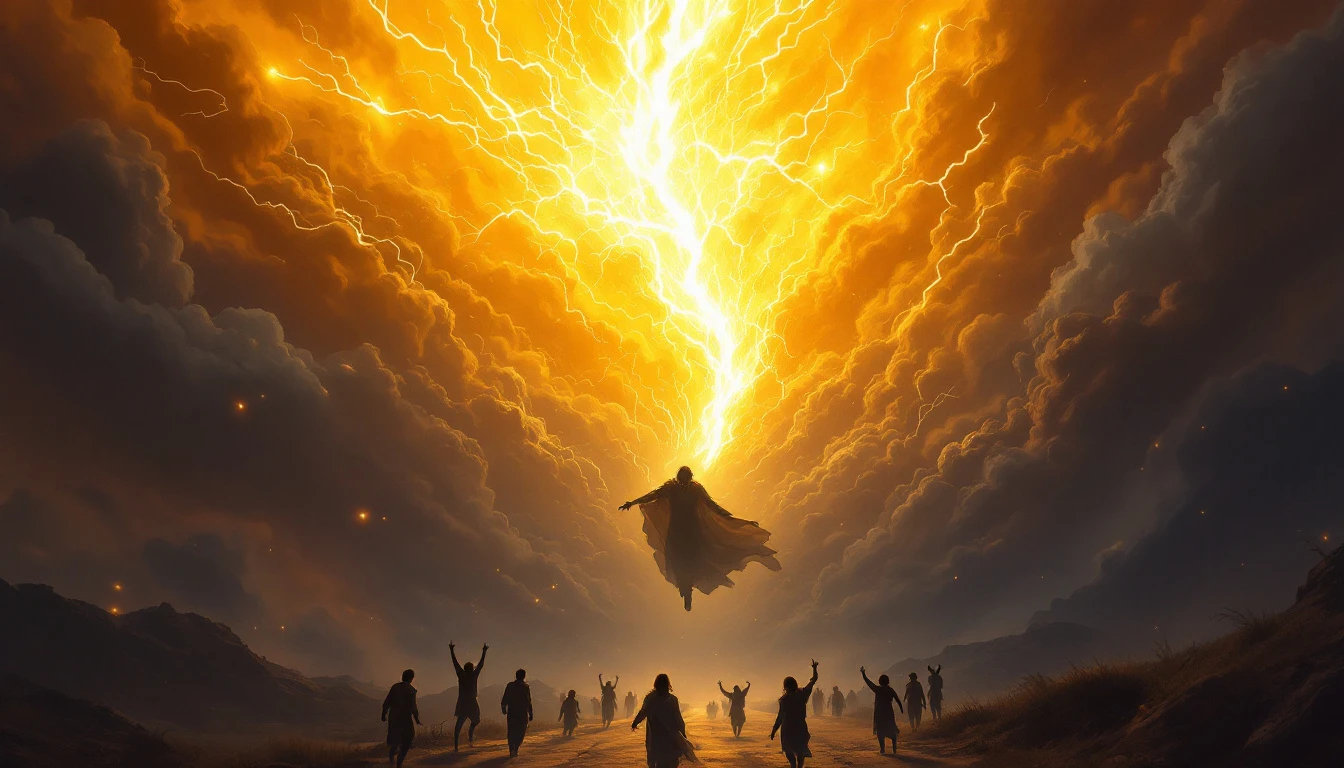
“I saw Satan fall like lightning from heaven” (Luke 10:18).
LUKE 10:17–18
17The seventy-two returned with joy and said, “Lord, even the demons submit to us in Your name.” 18So He told them, “I saw Satan fall like lightning from heaven.
Jesus says this just three verses after applying Isaiah 14:13–15 to Capernaum (Luke 10:15), and some hear an echo of Isaiah 14:12, “How you have fallen from heaven.”
Response: In Luke 10 Jesus uses Isaiah’s language for Capernaum, not for Satan. And verse 18 answers the disciples’ report that demons submitted to them (verse 17). It speaks of Satan’s defeat through the ministry of Jesus’ followers, not of a fall before creation.
4. Pride was the devil’s sin
1 TIMOTHY 3:6
He must not be a recent convert, or he may become conceited and fall under the same condemnation as the devil.
Response: Agreed. Scripture does link the devil’s condemnation to conceit, and that is the very point of these two chapters: pride goes before destruction. But this is taught in 1 Timothy 3:6, not in Isaiah 14 or Ezekiel 28. Pride is the sin of every rebel against God. It does not make every proud king the devil.
5. A long tradition
Jewish writings from around the time of the New Testament (such as the Life of Adam and Eve and 2 Enoch, both of uncertain date) borrowed Isaiah 14’s language for a rebellious angel. Early Christian writers such as Tertullian and Origen applied these chapters to the devil, Gregory the Great helped make the view standard in the medieval church, and John Milton’s Paradise Lost fixed it in the popular imagination.
Response: The tradition is real, but so is the other side of it. Reformation-era expositors rejected the Satan reading of Isaiah 14. John Calvin wrote that it “has arisen from ignorance; for the context plainly shows that these statements must be understood in reference to the king of the Babylonians.” Most important, the New Testament never quotes either chapter as describing Satan.
Weighing the case
These points explain why many Christians see Satan in Isaiah 14 and Ezekiel 28, and a teacher may fairly use these proud kings to illustrate the devil’s own pride. But each point depends on other passages. Nothing in Isaiah 14 or Ezekiel 28 itself identifies Satan, and the New Testament never uses either chapter to describe him.
Part 5
What Scripture Does Say About Satan

“That ancient serpent who is the devil and Satan” (Revelation 20:2).
Setting these two chapters aside does not leave us knowing nothing about Satan. Scripture says a great deal, and says it plainly.
He is the serpent of Eden
GENESIS 3:1
Now the serpent was more crafty than any beast of the field that the LORD God had made. And he said to the woman, “Did God really say, ‘You must not eat from any tree in the garden?’”
REVELATION 20:2
He seized the dragon, that ancient serpent who is the devil and Satan, and bound him for a thousand years.
He has sinned and lied from the beginning
JOHN 8:44
You belong to your father, the devil, and you want to carry out his desires. He was a murderer from the beginning, refusing to uphold the truth, because there is no truth in him. When he lies, he speaks his native language, because he is a liar and the father of lies.
1 JOHN 3:8
The one who practices sin is of the devil, because the devil has been sinning from the very start. This is why the Son of God was revealed, to destroy the works of the devil.
He disguises himself
2 CORINTHIANS 11:14
And no wonder, for Satan himself masquerades as an angel of light.
He leads angels, and was cast down
REVELATION 12:7–9
7Then a war broke out in heaven: Michael and his angels fought against the dragon, and the dragon and his angels fought back. 8But the dragon was not strong enough, and no longer was any place found in heaven for him and his angels. 9And the great dragon was hurled down—that ancient serpent called the devil and Satan, the deceiver of the whole world. He was hurled to the earth, and his angels with him.
MATTHEW 25:41
Then He will say to those on His left, ‘Depart from Me, you who are cursed, into the eternal fire prepared for the devil and his angels.
He is defeated through Christ
GENESIS 3:14–15
14So the LORD God said to the serpent: “Because you have done this, cursed are you above all livestock and every beast of the field! On your belly will you go, and dust you will eat, all the days of your life. 15And I will put enmity between you and the woman, and between your seed and her seed. He will crush your head, and you will strike his heel.”
See also Luke 10:18, John 12:31, and his final end in Revelation 20:10 (all quoted above). Pride is named as the root of his condemnation in 1 Timothy 3:6.
A note on 2 Peter 2:4 and Jude 6
These verses speak of “angels” who sinned and are now held in chains for judgment. They are usually connected with Genesis 6:1–4 (“the sons of God saw that the daughters of men were beautiful”) and the Watchers of 1 Enoch, which Jude quotes elsewhere (Jude 14–15). They describe a group of angels already imprisoned, not Satan’s original fall, since Satan is still active in the New Testament (1 Peter 5:8).
What Scripture does not say
The following details come only from reading Isaiah 14 and Ezekiel 28 as Satan’s history. No other passage teaches them:
That Satan’s name was Lucifer.
That Satan was a cherub, or the guardian cherub of God’s throne.
That Satan led the worship of heaven, or had musical instruments built into his body.
That Satan ruled a jeweled earth before Adam that was destroyed between Genesis 1:1 and 1:2 (the “gap theory”).
Conclusion: Who Are These Chapters About?
Isaiah 14 is about the king of Babylon
It is a taunt song Israel would sing when God broke Babylon’s power and set the captives free (14:1–4). “Day star, son of the dawn” is a royal title used to mock a king who thought himself divine and ended in a dishonored grave.
Ezekiel 28 is about the king of Tyre
It addresses the king who ruled Tyre in Ezekiel’s day; according to the list of Tyrian kings preserved by Josephus, this was Ithobaal (Ethbaal) III, who reigned during Nebuchadnezzar’s siege. In Ezekiel’s characteristic vivid poetry, the king is cast as a new Adam in God’s garden: richly blessed, set in a high place, and expelled for his pride and greedy trade.
Why this conclusion
1.
Both passages name the king they address (Isaiah 14:4; Ezekiel 28:2, 12).
2.
Both call him a man (Isaiah 14:16; Ezekiel 28:2, 9).
3.
Both use imagery the prophets use elsewhere for human rulers and nations (Obadiah 3–4; Ezekiel 31; Luke 10:15).
4.
Both name sins of human kings: oppression, pride, and dishonest trade.
5.
Both describe human deaths: the sword, the grave, the Pit, ashes.
6.
The New Testament never quotes either chapter about Satan.
Interpretation and application
The right place for Satan in these chapters is application, not interpretation. These kings display the same pride Scripture elsewhere ties to the devil (1 Timothy 3:6), and Scripture elsewhere shows dark powers working behind the empires of this world (Daniel 10; Ephesians 6:12). It is fair to say, “Here is what the devil’s pride looks like in a human life.” It goes beyond the text to say, “This chapter tells us Satan’s backstory.”
Nothing essential is lost by reading the passages this way. Scripture still teaches plainly that Satan is a created being who sinned from the beginning, a proud deceiver, the ancient serpent, already defeated by Christ and headed for final judgment. What falls away are the speculative details. What remains is a sober warning for every person and nation tempted to say, “I will make myself like the Most High.”
For Discussion
1.
Read Isaiah 14:4–21 aloud without stopping. Does the subject ever seem to change? What in the text tells you so?
2.
Compare Isaiah 14:13–15 with Obadiah 3–4 and Luke 10:15. What does “ascending to heaven” mean in each?
3.
Compare Ezekiel 28:13 with Ezekiel 31:8–9. How does Ezekiel use “Eden”?
4.
Ezekiel 28:5, 16, and 18 name the king’s sin. What is it, and what does that suggest about who is being addressed?
5.
If these chapters are about human kings, what do they teach about pride, wealth, and power today?
6.
What do we know about Satan from the passages that clearly speak of him? Is anything important missing?
Notes
Scripture quotations are from the Berean Standard Bible (BSB), which is in the public domain. KJV wording is cited where noted for comparison.
Several of the arguments in Parts 1 and 2 are adapted from Steve Gregg’s verse-by-verse lectures on Isaiah 11–14 and Ezekiel 25–32 (The Narrow Path, thenarrowpath.com).
Calvin quotation: Commentary on Isaiah, on Isaiah 14:12. Dating of Ithobaal III follows the list of the kings of Tyre preserved by Josephus.